Agriculture Insurance
Tools for Agriculture Insurance
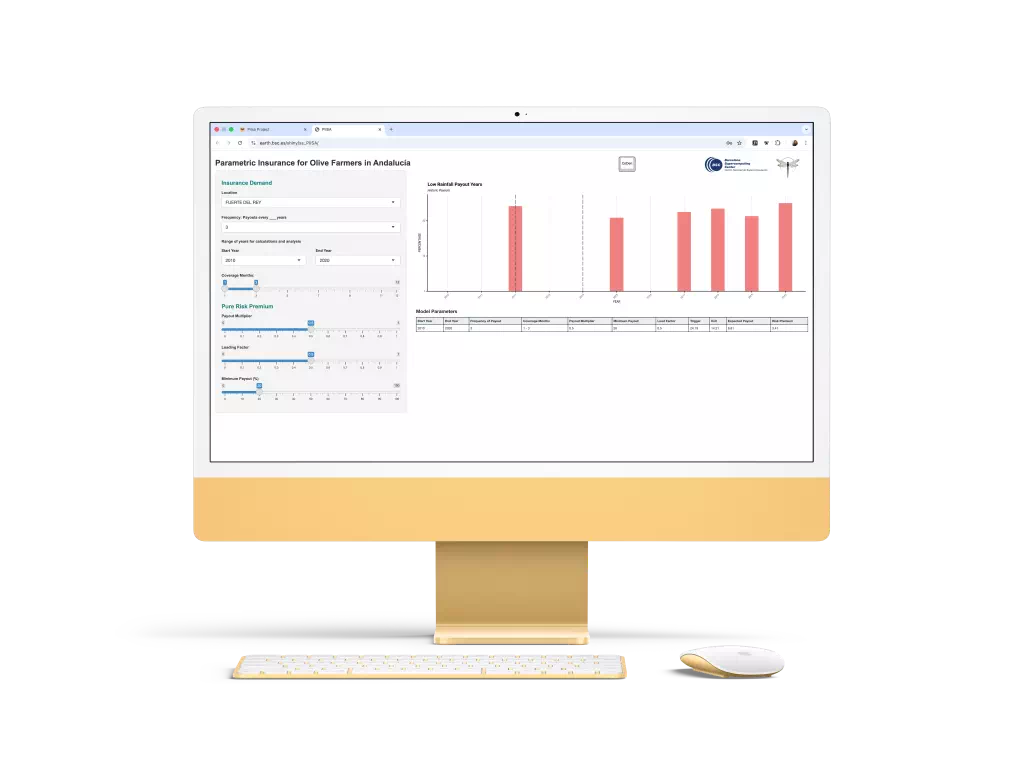
01. Co-Depi
CoDepi (Co-Designing Parametric Insurance) is a participatory tool co-developed in the PIISA project to support the design of index-based climate insurance solution for agriculture. It is a Shiny App that allows farmers, researchers and insurers to jointly define insurance trigger thresholds using farmer-identified “bad” years and cross-verification with independent climate data.
The tool enables users to test climate thresholds, contract periods and payout structures and evaluate how specific configurations of the base index parameters affect historical payouts and verify the results using different climate data sources. By aligning insurance triggers with farmers’ experiences, CoDepi helps reduce basis risk and supports the development of more transparent and demand-driven parametric insurance solutions.
Replication of the CoDepi framework in other contexts can be achieved by adapting the model’s base parameters to the climatic, agronomic and institutional characteristics of the target region. This involves identifying locally relevant climate hazards, understanding seasonal calendars, defining crop-specific contract windows and thresholds through active stakeholder engagement, and calibrating the index using historical climate data. Because the methodological structure remains constant, the approach has strong potential to be transferred to other crops, regions or countries.
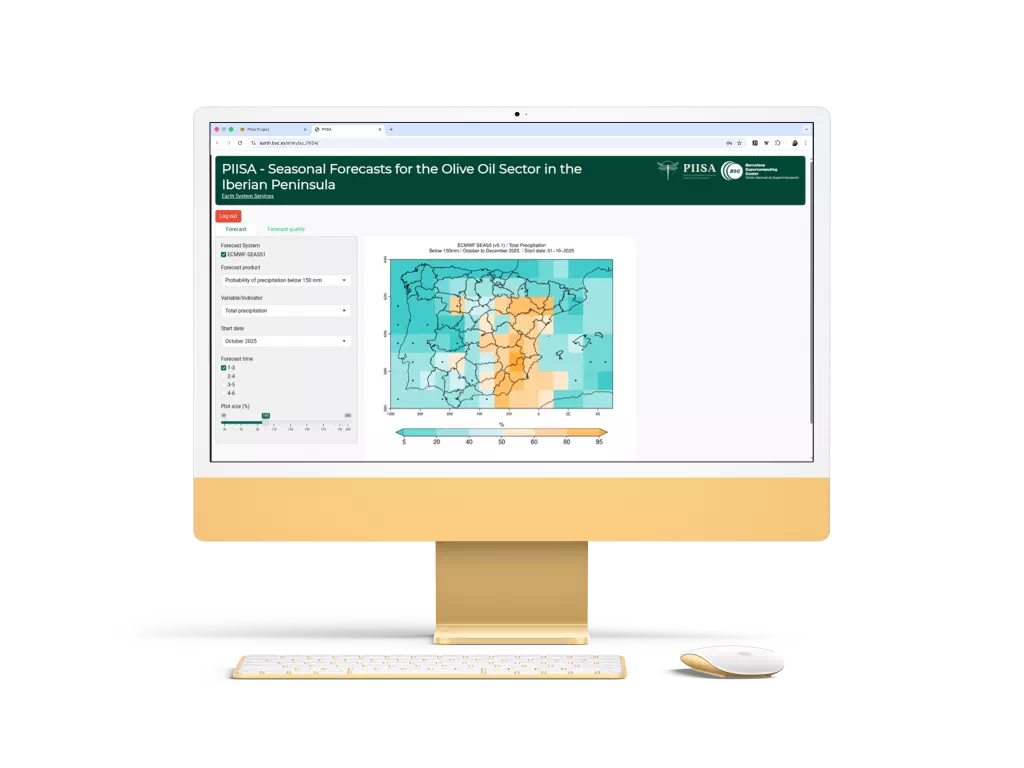
02. Shiny App for Seasonal Forecasts
This Shiny App supports farmers in adapting to climate risks by providing access to bias-adjusted probabilistic forecasts for selected climate variables and thresholds. The tool allows users to visualise forecast probabilities and examine associated forecast skill metrics. Forecasts are ensemble-based and expressed as probabilities of events (e.g., precipitation below a specified threshold). They are bias-adjusted using established post-processing methods. Forecast performance is assessed using hindcast data for the period 1993–2016 and evaluated with the Ranked Probability Skill Score (RPSS).
The seasonal forecast application can be further upscaled to provide relevant climate information for other regions important to the sector, such as across Mediterranean countries. This is feasible because the underlying datasets have global coverage. However, generating tailored indicators for other regions requires adapting the thresholds originally defined for Andalusia to locally relevant climate conditions within the same analytical framework. The tool can also be extended to other sectors by selecting appropriate climate variables and indicators that support decision-making and help reduce vulnerability to specific climate risks.